
Good morning. It’s Monday, Oct. 26.
- Court says Trump’s National Guard deployment was illegal.
- Berkeley math teacher says AI has made grading pointless.
- And what it’s like to live in a California ghost town.
Statewide
1.
The Justice Department on Friday sent letters to counties across California demanding they sequester ballots returned by suspected noncitizens or “risk significant federal scrutiny.” The agency has described the noncitizen status of roughly 20,000 individuals as “highly likely” and even “confirmed,” but many have been found to be U.S. citizens. In Inyo County, the registrar of voters said she was sent the names of just two people and neither were issued ballots. Mendocino County said no one on the list it received lives there. California officials denounced the letters as politically motivated and legally indefensible. N.Y. Times | L.A. Times
- During a hearing on Sunday, a federal judicial panel appeared skeptical of the administration’s demand to set aside ballots. A Trump appointee on the court said California has the right to determine the manner of its elections. A.P. | Politico
2.

The Ninth Circuit Court of Appeals ruled on Friday that President Trump had no legal authority to usurp Gov. Gavin Newsom’s command of California’s National Guard and deploy the troops to Los Angeles during immigration protests last year. A Trump appointee joined the majority in rejecting Trump’s claim that the protests amounted to a rebellion against the U.S. The ruling seemed to settle the question of whether Trump could send federalized guards to polling places, said Erwin Chemerinsky, the dean of UC Berkeley’s law school. “I think this clearly says no, you can’t.” N.Y. Times | L.A. Times
3.
Most the 28 California immigrants targeted by federal prosecutors on charges of illegally registering or voting had applied for U.S. citizenship, the Associated Press reported. Among them was José Antonio Bañuelos-Díaz, 42, who has been living in the U.S since he was a toddler. He said he had no idea he registered to vote until he was arrested, though he wonders if he did so by accident when getting a driver’s license. “I have never voted because I know I can’t vote,” he said. “If there was a mistake, they should have called me out right away, not 20 years later.” Bañuelos-Díaz faces years in prison if convicted.
4.
For parents looking to send their young ones to the University of California, the latest price estimate — including tuition, room, and board — may come as a shock. For UC Berkeley, it’s $54,674 this year. The campuses in Santa Barbara and Irvine also surpass the $50,000 mark. The New York Times reports:
“This, like so many laments about what things cost in America, is a housing story. Public schools that provide a residential undergraduate education are also selling undergraduates an education in what it means to afford a residence.”
5.
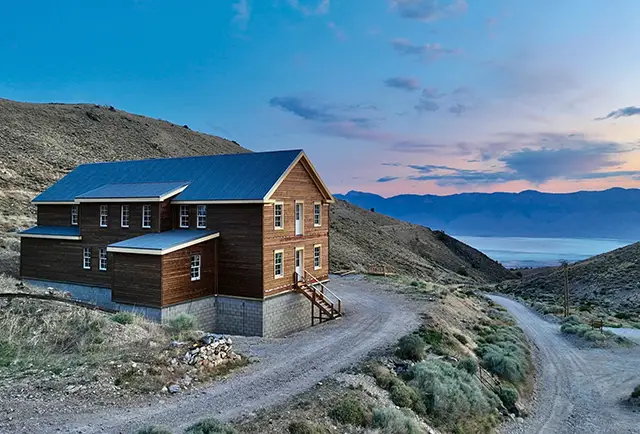
In 2018, Brent Underwood, then 30 years old, took out a loan and bought a ghost town in the Eastern Sierra with the vague hope of bringing it back to life. He relocated to the former silver mining boomtown, Cerro Gordo, during the pandemic and has been living there ever since. Some days, he wrote, it can feel like the world is moving on without him. Other days feel like a dream: “I wake up in a house built in the 1870s and out my window watch the first light illuminate Mt. Whitney, move down the Sierra Nevada, cross the dry lakebed of Owens Lake, and eventually hit town.” Outside Magazine
6.
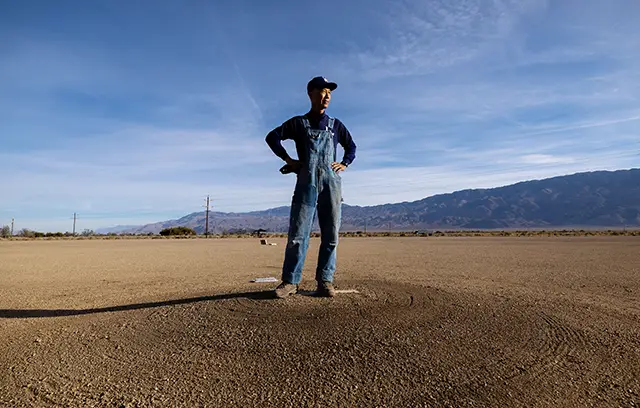
At the Manzanar War Relocation Center, one of the 10 camps where Japanese Americans were imprisoned during World War II, baseball was a quiet expression of loyalty to the U.S. Residents of the camp in the dusty Eastern Sierra built fields, sewed uniforms, and formed dozens of teams. More than 80 years after the camp’s closure, players from California’s Japanese American baseball league played on a rebuilt field at Manzanar earlier this month — this time as an act of resistance. The Guardian
Northern California
7.
Richard Borcherds, a prominent math professor at UC Berkeley, said he has stopped grading his students’ homework. With the ubiquity of artificial intelligence, he said, there is “no point.” Instead, he gives students credit for completing assignments, no matter if they are done correctly. Borcherds said AI has scrambled the career outlook for math majors: “I have no idea what to advise. I even asked ChatGPT this exact question, and even ChatGPT said it didn’t have any idea what was going to happen.” Daily Californian
8.

A New York Times article on Marissa Mayer’s reinvention as a startup founder begins with a bleak anecdote. Late last year, Mayer’s 10-year-old daughter, Marielle, came home with request from her teacher for three bullet points on what made her special. Mayer, a former chief executive of Yahoo, was overwhelmed, the Times wrote: “So Mayer asked her personal AI assistant, Dazzle. Within a few seconds, Dazzle delivered an answer. ‘It came back and was like, your daughter is empathetic, creative and an animal lover,’ Mayer said. She thought it was perfect.”
9.
While attending medical school in 2008, Charles Rickert was inspired by a radio program to consider organ donation. Within months, he gave one of his kidneys to a complete stranger in the hope of saving that person’s life. Rickert was so moved by the experience that he pursued the field of transplant surgery, performing hundreds of operations. Then, two months ago, he did it again. Rickert donated a portion of his liver to another stranger. “My life has been so enriched by others … what I want to do is to spread that to others,” he said. NBC Bay Area
Southern California
10.
A motorist who was believed to be intoxicated plowed head-on into a group of about 30 cyclists on a late-night Halloween ride in San Bernardino County on Saturday, killing two people and fleeing the scene. A third person suffered major injuries. Winni Mercado lives nearby and heard screaming and crying after the crash: “It was just awful. I know that I will never get that sound out of my head.” Police arrested Valentin Alberto Rodriguez, 38, hours later at his home, charging him with multiple felonies. KABC | KTLA
11.
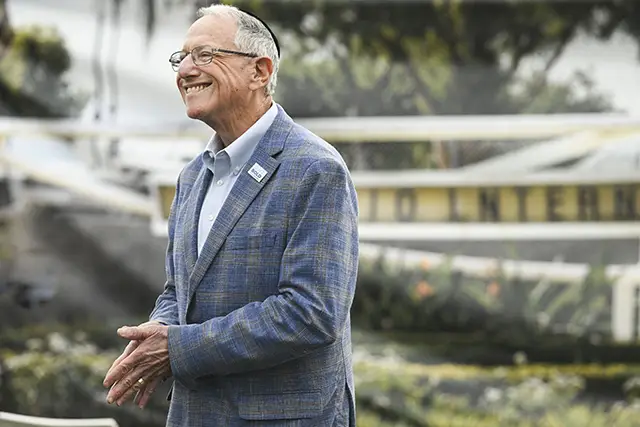
Between 2021 and 2026, one member of the board that oversees Ontario International Airport, in San Bernardino County, was reimbursed $2,865 for travel. Three others recorded no travel expenses at all. The final member, Alan Wapner, was reimbursed $185,000. He went to Hong Kong, Rio de Janeiro, the Bahamas, New Orleans, Amsterdam, Spain, Turkey, and Hawaii. Wapner says the explanation is simple: he works harder than everyone else. The FBI paid him a visit over the summer. Daily Bulletin
12.
A bitter feud between the news site L.A. Taco and its star reporter Memo Torres spilled into the open after the publication fired him for violations of “basic journalistic standards” last week. Torres was once a landscaper with an Instagram account on his eating adventures who rose to become what fans have called the Walter Cronkite of L.A.’s deportation crackdown. Supporters framed his firing as a move to curtail immigration coverage, a charge L.A. Taco fiercely denied. Citing insiders, L.A. Material reported that a romantic relationship with a state lawmaker factored into Torres’ exit.
Get your California Sun T-shirts, phone cases, hoodies, hats, and totes!


The California Sun, PO Box 6868, Los Osos, CA 93412

Wake up to must-read news from around the Golden State delivered to your inbox each morning.