
Good morning. It’s Wednesday, Sept. 9.
- Anthropic researcher quits over fears of existential risk.
- Powerful waves clobber homes in Southern California.
- And a skater’s “brutal and wondrous chronicle” of L.A.
Statewide
1.
On Sunday, the Trump administration asked the Supreme Court again to allow its plans to limit voting by mail, which President Trump has derided as “mail-in cheating.” With less than two months until the midterms, some California officials are now pushing a contingency plan: avoid the Postal Service altogether. As an alternative, they are encouraging voters to use drop boxes, which can accept ballots from anywhere in the state. In Merced County, the registrar of voters moved to deploy more than double the number of drop boxes required by law. S.F. Chronicle
Northern California
2.
An Anthropic researcher announced on Tuesday that he was quitting his job over fears that artificial intelligence companies are rushing to build dangerous systems that they won’t be able to control. The AI industry is “gambling with our lives,” Jacob Coxon, 27, wrote in a social media post. He added: “The people building AI earnestly believe that it could kill us all by the end of the decade. This is not a marketing stunt.” Wall Street Journal
3.
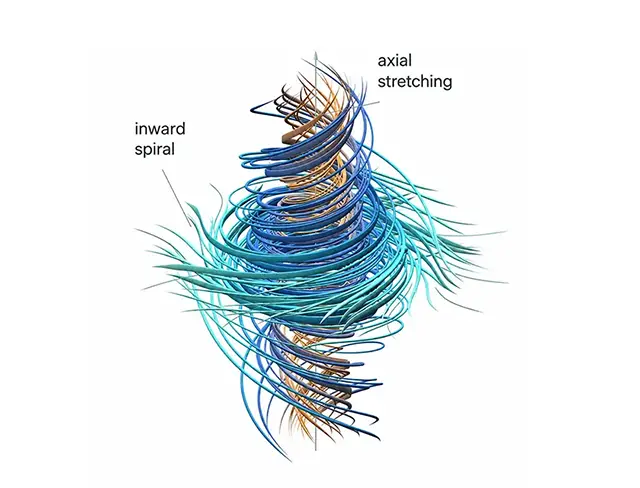
OpenAI announced on Tuesday that it solved one of the most significant unanswered math questions, the clearest sign yet that AI will transform the field of mathematics. The company said its model needed just 88 hours to figure out the “Navier–Stokes existence and smoothness problem,” which involves a series of equations often used to predict weather. Terence Tao, a leading math professor, warned that using AI to solve hard math problems will harm human understanding. “It’s like having machines that can lift weights for you at the gym,” he said. N.Y. Times
4.
Leopold Aschenbrenner, a 24-year-old wunderkind, founded his hedge fund on a promise of access to the people working to usher in general artificial intelligence. He quickly turned a $225 million initial investment into $45 billion. In July, he managed to lose $35 billion in a matter of days. The Financial Times called it the largest trading loss in history. The Atlantic looked for lessons: “Aschenbrenner’s story of hubris may foreshadow a larger risk for today’s AI-driven boom, if it continues to stake its future on the bluster of young savants.”
5.
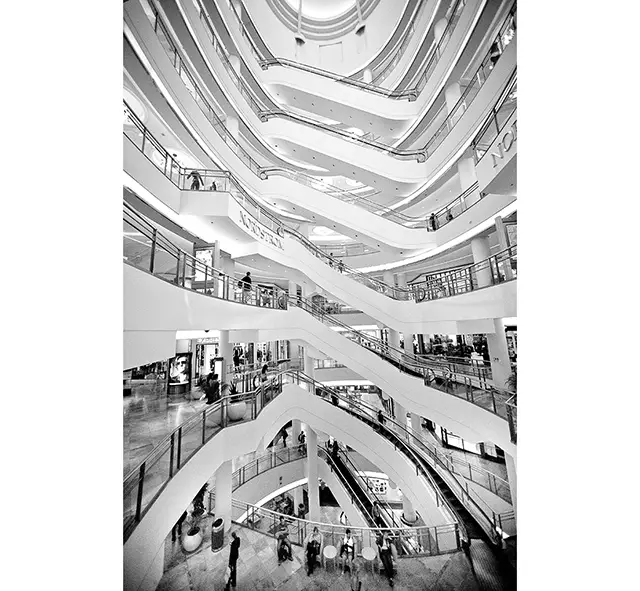
The downtown site of what was San Francisco’s biggest mall represents a 1.5-million-square-foot hole in the city’s AI-fueled comeback, the Wall Street Journal reported. San Francisco Centre, once a thriving retail destination, closed earlier this year. Then a proposed sale collapsed in July: “Now, the mall is back on the market, with bids due Wednesday. Brokers expect it to sell for no more than $130 million — a shockingly meager sum compared with its $1.2 billion valuation a decade ago.”
6.
A Sacramento man was recently sentenced to 188 years in prison for a drunk driving crash that killed all five of his passengers. According to prosecutors, Cameron Garcia, 32, spent all day drinking by the Sacramento river on Feb. 9, 2023, before piling into his sport utility vehicle with his 17-year-old niece, a longtime friend, and several other young people. He veered off a rural road and hit a tree at 101 mph. Garcia then tried to flee before being chased down by police. Sacramento Bee | L.A. Times
7.
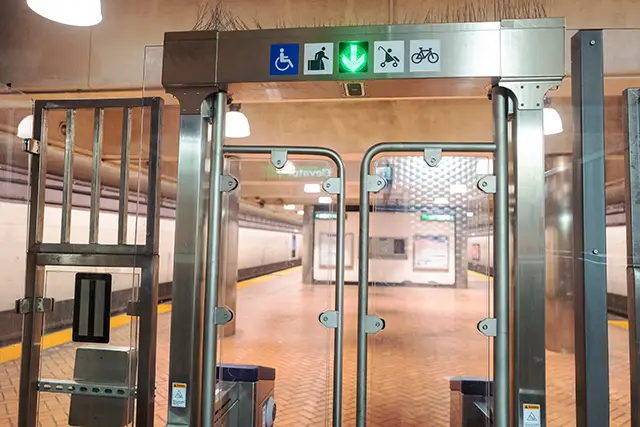
Last year, BART completed the installation of new fare gates, made of plexiglass with metal frames, replacing the old waist-high barriers that were easy to jump. Crime has since plummeted, new data showed. According to Bay Area transit agency, the crime rate against riders fell 67% between December 2024 and June 2026. Ridership is also up. “They’ve been a real game changer,” Robert Powers, BART’s general manager, said of the new gates. KQED | NBC Bay Area
8.
“It meant a lot to me. A lot.”
After wildfires devastated the Hawaiian town of Lahaina in 2023, students at Paradise High School designed T-shirts in solidarity. They read: “From One Paradise to Another – Ho’ihi,” using a Hawaiian word for respect. Later, the school’s athletic director had an idea: a football series between Paradise and Lahainaluna High that would demonstrate the bond between two communities devastated by fire. NFL quarterback Aaron Rodgers, a native of surrounding Butte County, chipped in money for travel. On Saturday, the teams met on a field in Maui. It brought up a lot of emotions. Maui News | Maui Now
9.
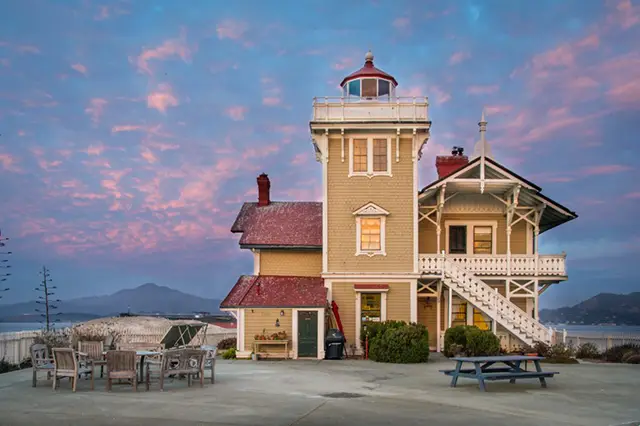
You can stay overnight in a Victorian lighthouse on a tiny island in the San Francisco Bay. East Brother Light Station was created in 1873 to guide boats around danger in the fog-bound strait leading to the California delta. In 1980, the former keeper’s house was reborn as a bed and breakfast to fund the upkeep of the lighthouse, which was by then automated. KQED’s Olivia Allen-Price recently paid a visit: “East Brother Light Station looks like it could have been plucked from a child’s storybook,” she said.
- See a photo diary from a guest’s stay at the lighthouse.
Southern California
10.
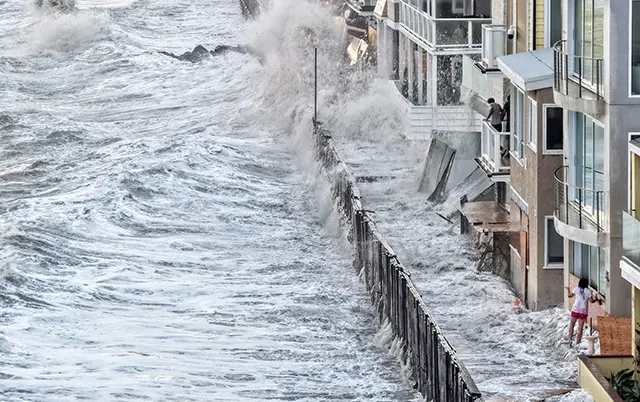
Hurricane Marie never made landfall. But the storm system still created havoc this week in Southern California. A roundup:
- A massive sinkhole opened beneath the driveway of actor Nicolas Cage’s Malibu home on Tuesday, prompting officials to order more than 30 neighbors along the street to evacuate. L.A. Times | KABC
- Further south, giant waves slammed into beachfront properties in Long Beach, Dana Point, Capistrano Beach, and beyond, inundating homes, downing palm trees, and turning sandy beaches into rocks and rubble. Surfer Magazine | Long Beach Post
- The weather journalist Jonathan Petramala captured dramatic video in Long Beach.
- Amtrak’s Pacific Surfliner, San Diego’s only rail connection to points north, was closed on Tuesday after waves chewed away at the tracks in San Clemente. Officials have been working on long-term plans to move sections of the line inland as erosion forces repeated closures. S.D. Union-Tribune
11.
During the pandemic, an interior designer named Melissa Strukel learned about a hotel for sale in Jacumba, a tiny desert town along the U.S.-Mexico border. The hotel, it turned out, came attached to 155 acres of the town, including Jacumba Mountain, a lake, and a gas station. She roped in two friends to go in on Jacumba Hot Springs Hotel. All told, they’ve invested $13 million on the project, all self-funded. They risked their fortunes, they say, to seek something more than just profit: an antidote to modern life. S.D. Union-Tribune
12.
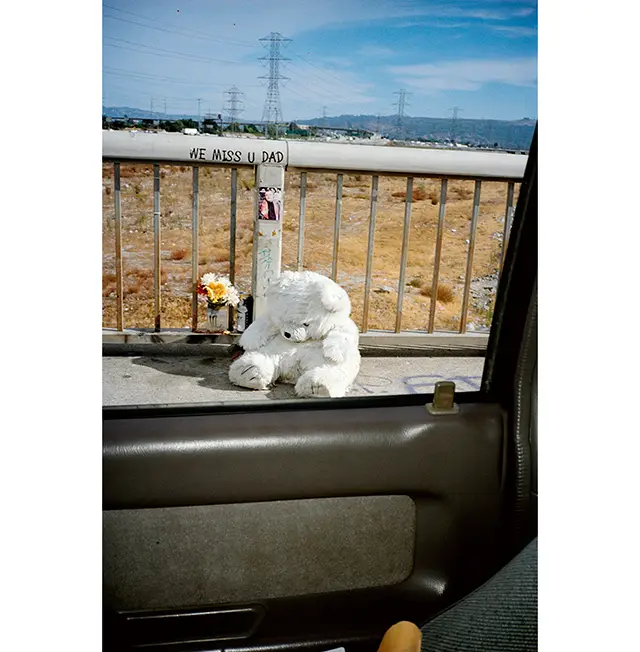
Jerry Hsu, a professional skateboarder by his mid-teens, became fascinated by the craft of the photographers sent to shoot pictures of him. He eventually began taking pictures of the strange sights he encountered while skating around Los Angeles: an overturned car, two discarded toilets stacked like yin and yang, a bank building ablaze. The images have now been curated in a new photobook, “How About Never.” The New Yorker called it “a brutal and wondrous chronicle” of Los Angeles.
Get your California Sun T-shirts, phone cases, hoodies, hats, and totes!


The California Sun, PO Box 6868, Los Osos, CA 93412

Wake up to must-read news from around the Golden State delivered to your inbox each morning.