
Good morning. It’s Wednesday, March 18.
- A plan to put 7% of California under tribal stewardship.
- Professor faces threats over findings on immigrant crime.
- And a remarkable turnaround at Wired magazine.
Statewide
1.
“Profoundly shocking.”
“Deeply troubling.”
“Crushing.”
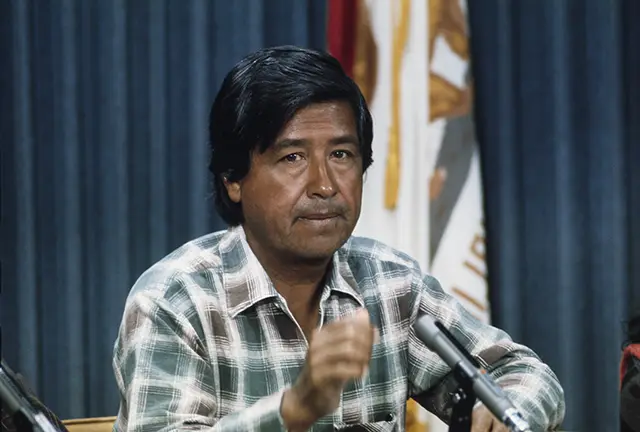
Two California organizations connected to Cesar Chavez — the Cesar Chavez Foundation and the United Farm Workers — said they were aware of accusations that the labor icon sexually victimized women and minors. Rumors have circulated in recent days of a forthcoming investigation on Chavez by the New York Times. Both groups suggested on Tuesday that the allegations are serious enough to force a reckoning on Chavez, who died in 1993 at age 66. The development came as groups across California planned to hold Cesar Chavez Day events at the end of March. Some announced cancellations. San Antonio Express News | L.A. Times
2.

“It’s just a culture now that says, ‘Anything goes.'”
As Border Patrol agents have roamed the country in search of undocumented immigrants, they have engaged in a pattern of aggressive behavior that one judge said “shocks the conscience.” On Tuesday, a coalition of news organizations published a video investigation that identifies five members of Greg Bovino’s El Centro Border Patrol unit, showing how they beat protesters and fired chemical munitions at people’s heads in Los Angeles, Bakersfield, Chicago, and Minneapolis. CalMatters
3.
California on Tuesday announced a plan to bring at least 7% of the state’s land and waters under the care of Indigenous tribes. The figure — representing roughly 11,700 square miles, or more than double the size of Los Angeles County — corresponds to the amount of land the federal government had falsely promised to Indigenous tribes after California joined the union in 1850. Supporters of the move have portrayed it as both a moral and practical imperative, as tribal stewardship elevates habitat restoration and fire management. L.A. Times
4.
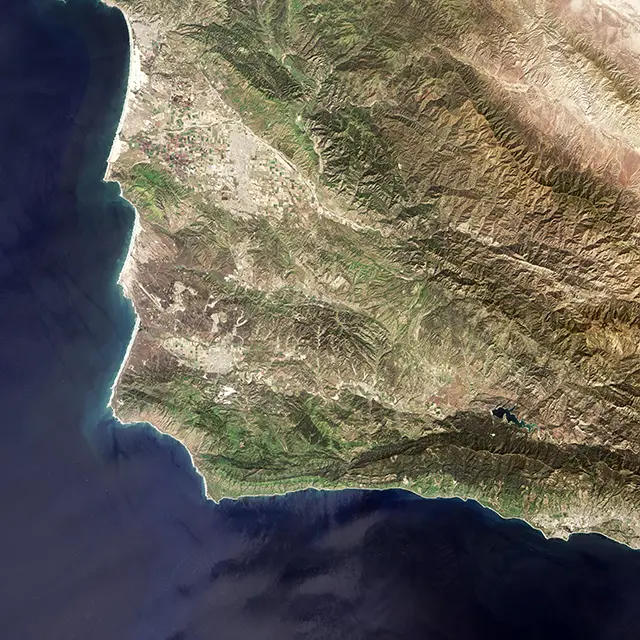
The Sierra Nevada, stretching roughly 400 miles, looms mightily over the story of California. But it’s the coastal ranges that define the everyday lives of most Californians, huddled as they are within 30 miles of the ocean. Take the western Transverse Ranges. Running through Santa Barbara County, the belt of tectonic disruption has given rise to a mosaic of vast dunes, freshwater wetlands, and peaks that soar more than 6,000 feet above the sea. Cal Geographic, a geology blog delivered in elegant prose, wrote about the “quintessentially convoluted geologic environment” of the western Transverse Ranges.
Northern California
5.
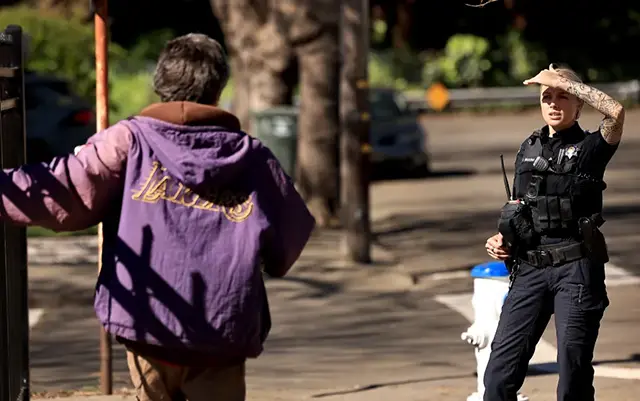
During a ride-along last week, a Santa Rosa police officer, Taylor McDonagh, told a Press Democrat reporter that she had only faced a couple situations where she might have to fire her weapon. “Fortunately, I never had to,” she said. A day later, that would change. On Thursday, McDonagh responded to an agitated man who began walking toward her. “I’m trying to die,” he told her. McDonagh ordered him to get on the ground. “Don’t make me do this,” she said. “Shoot me!” he yelled. A photojournalist captured dramatic images of what followed. Press Democrat
6.
On March 3, a motorist watching YouTube on his phone sped past road flares on Highway 101 in Redwood City and slammed into the back of a California Highway Patrol car that was responding to an accident. The crash highlighted a paradox of modern driving: as cars become more automated, motorists are increasingly over-reliant on the technology. “We see people reading, watching videos, watching a football game,” said CHP officer Sophie Lu. S.F. Chronicle
7.
Anger over autonomous cars has created an unexpected hazard for Waymo passengers in San Francisco: being stuck inside when someone goes on an anti-robot rant. Doug Fulop, 37, was riding home one night in January when a man approached and began screaming at him. He punched the vehicle’s windows and yelled that he wanted to kill Fulop. He did not appear to be intoxicated. He was overtaken by extreme anger at the self-driving car. “We felt helpless,” Fulop said. N.Y. Times
8.
Wired has been transformed from a fading magazine into a bright spot for the publishing giant Condé Nast. In the past year, the San Francisco magazine added 200,000 new paying subscribers. The turnaround has been attributed to Katie Drummond, the 40-year-old editor, who created a politics team that delivered big scoops on the Trump administration. Some readers say Wired has strayed from its tech roots, a complaint Drummond has no patience for. “If you still don’t understand why Wired covers politics,” she said, “you are either willfully ignorant or a complete idiot.” N.Y. Times
9.
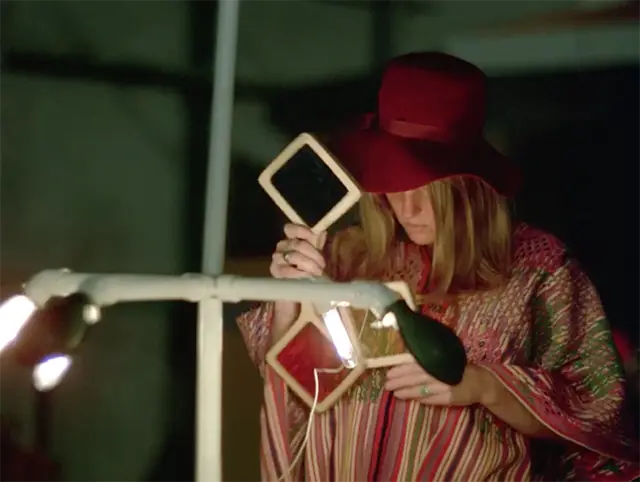
Frank Oppenheimer, a physics professor and brother of the noted atomic bomb scientist, founded the Exploratorium in San Francisco in 1969. A few years later, he commissioned a short documentary that would capture the spirit of the place, which was conceived as more of a learning lab than a museum. The 16-minute film that resulted was nominated for an Oscar. Aeon, a magazine of philosophy and culture, revisited the classic documentary that let viewers spy on guests young and old as their minds are blown by the Exploratorium’s reality-bending exhibits.
Southern California
10.
In November, UC Irvine professor Charis Kubrin was named winner of the Stockholm Prize in Criminology, the field’s highest honor. Yet when she goes to accept her plaque from Sweden’s Queen Silvia in June, it will be for research most Americans flatly reject. Kubrin has found that immigrants, regardless of legal status, are less likely to commit serious crime than native-born Americans. Kubrin said she sometimes despairs over the gap between what is believed and what is true. “When I start to feel shaken by all of this, including threatening emails, I go back to what I have control over, which is the research,” she said. S.F. Chronicle | O.C. Register
11.

Vanity Fair hired three influencers to cover the red carpet at its Oscar party on Sunday night. It didn’t go well. Jake Shane, known for humorous TikTok videos, seemed at a loss for words when interviewing Kris Jenner. At one point Jenner asked, “How did you get this gig?” “I don’t know, honestly,” Shane replied. Variety found the episode dismaying. “Red-carpet reporting is a craft,” the publication wrote. “It ought to be practiced by people who know what they’re doing.”
12.
Ellie Park, 8, had tried and failed to break the taekwondo boards the day before her test at the American Tigers Taekwondo school in Mission Viejo. When the big day arrived, Ellie stood shaking on the mat before an audience of parents as her instructor held out a board and invited her to kick it. She needed a break. Returning later, Ellie made two failed attempts. On the third, the board snapped. A video of her blissed-out reaction went viral. Upworthy
Get your California Sun T-shirts, phone cases, hoodies, hats, and totes!


The California Sun, PO Box 6868, Los Osos, CA 93412

Wake up to must-read news from around the Golden State delivered to your inbox each morning.