
Upton Sinclair in an undated photo. (Charles E. Young Research Library/UCLA)
Before Bernie Sanders, there was Upton Sinclair
The muckraking journalist Upton Sinclair is best remembered for his 1906 book “The Jungle,” which exposed the grotesque conditions endured by both workers and livestock in Chicago’s meatpacking industry. It sold millions of copies, stirring the country. President Theodore Roosevelt called on the 27-year-old Sinclair to give him a firsthand account, culminating in a pure-food statute that led to the creation of the Food and Drug Administration.
Sinclair kept up pressure for reforms, annoying Roosevelt, who wrote a note to his publisher: “Tell Sinclair to go home and let me run the country for a while.”
But Sinclair, a mild-mannered man who stood 5’7″, was only getting started. In more than 90 books and thousands of speeches over the next six decades, he championed strong trade unions, birth control, an honest press, vegetarianism, education reform, and other causes.
Along the way he collected a Pulitzer Prize, fictionalized the Southern California oil boom in a book that inspired the film “There Will Be Blood,” and uttered his immortal aphorism: “It is difficult to get a man to understand something, when his salary depends upon his not understanding it.”
In 1923, Sinclair was arrested during a pro-labor rally in San Pedro after he began to read from the Bill of Rights. “We’ll have none of that Constitution stuff,” the arresting officer remarked.
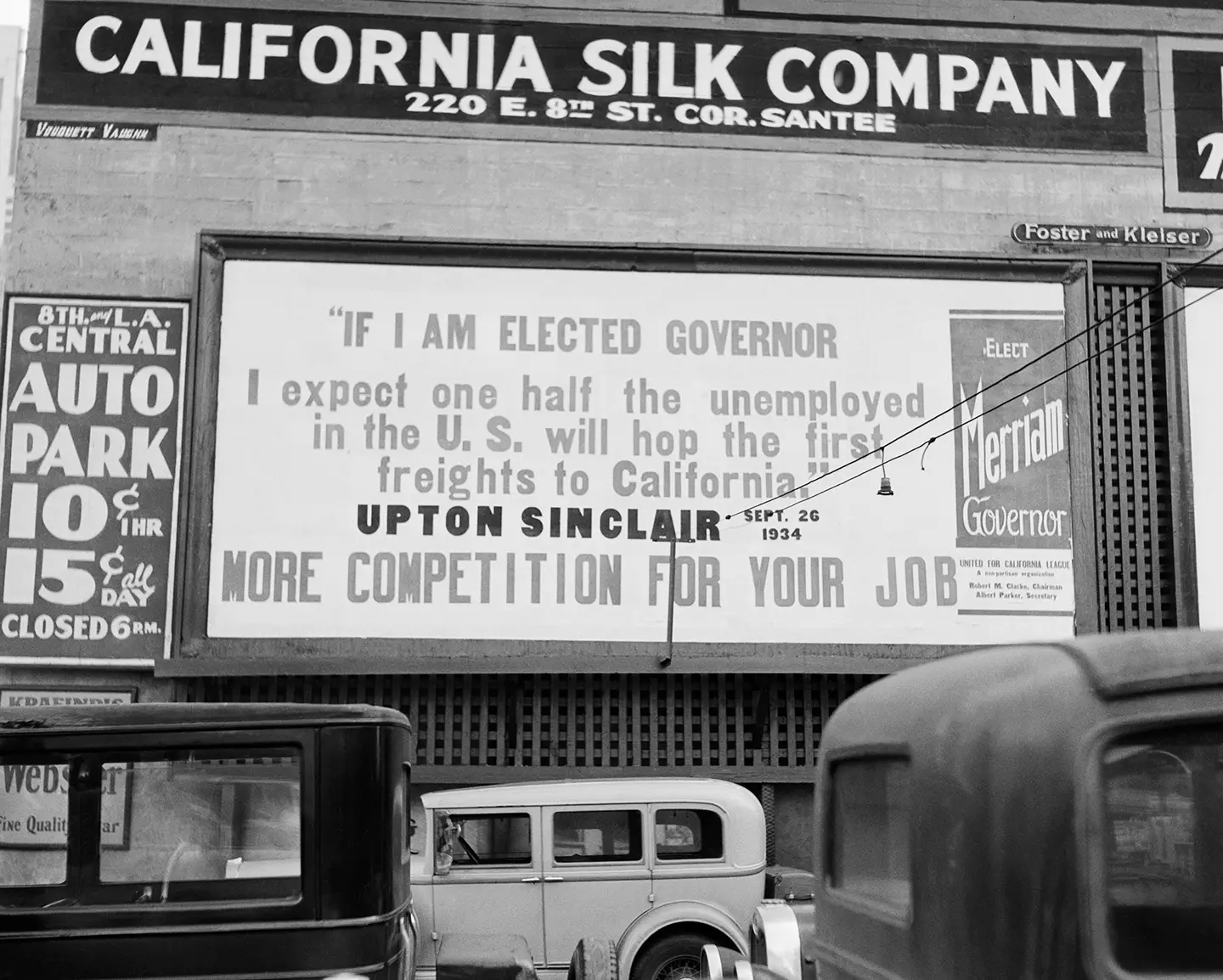
During the Depression, Sinclair ran for governor as a Democrat under the End Poverty in California banner. Of the state’s 7 million inhabitants, a million were out of work. Sinclair appeared poised to handily beat the incumbent Republican Gov. Frank E. Merriam. But Hollywood and the state’s leading newspapers mounted an astonishing smear campaign.
“The prospect of a socialist governing the nation’s most volatile state sparked nothing less than a revolution in American politics,” wrote Greg Mitchell, author of “The Campaign of the Century.” Sinclair’s foes, Mitchell added, “virtually invented the modern media campaign.”
Sinclair lost. But his campaign changed the Democratic Party. Sinclairites were elected in Sacramento and Washington, where they fought for civil rights legislation and labor reforms. The California Supreme Court Justice Stanley Mosk later called Sinclair “the acorn from which evolved the tree of whatever liberalism we have in California.”
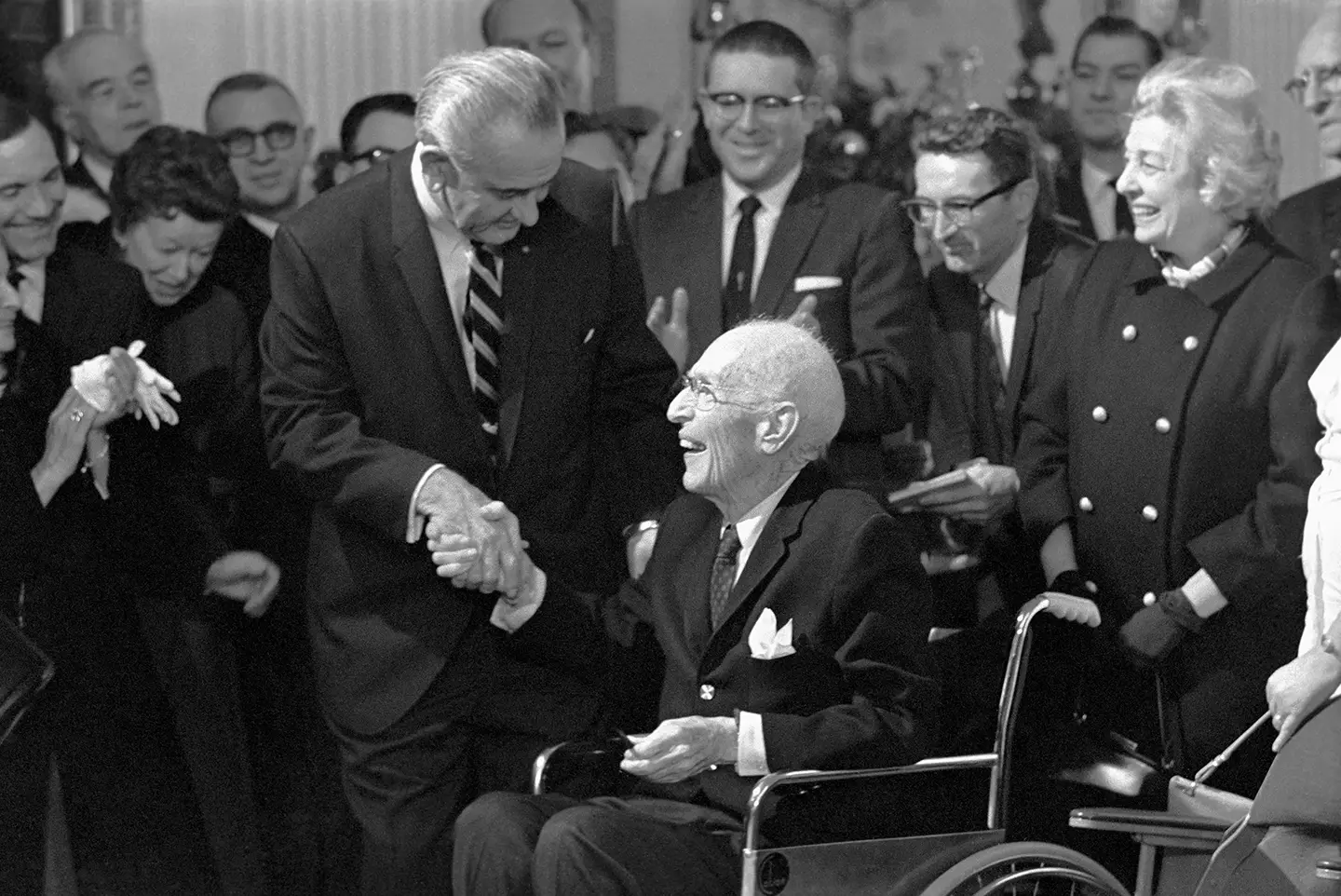
Toward the end of his life, Sinclair summed up his work this way: “The English Queen Mary, who failed to hold the French port of Calais, said that when she died the word ‘Calais’ would be found written on her heart. I don’t know whether anyone will care to examine my heart, but if they do they will find two words there — ‘Social Justice.’ For that is what I have believed in and fought for.”
More from the California Sun
- Before Bernie Sanders, there was Upton Sinclair
- California Sun readers share feedback on the newsletter
- Photos: Rare September snow dusts June Lake in Eastern Sierra
- Highway 1 used to be a wooden boardwalk for cars
- Swooning over San Francisco’s Tetris house
Get must-read stories about California your inbox each morning . Sign up here.
Get your daily dose of the Golden State.